- Электронная почта: info@cnlcdisplay.com
- Телефон: 8613728004632





При установке наружный цифровой рекламный дисплейМногие проекты сталкиваются с одной и той же проблемой:
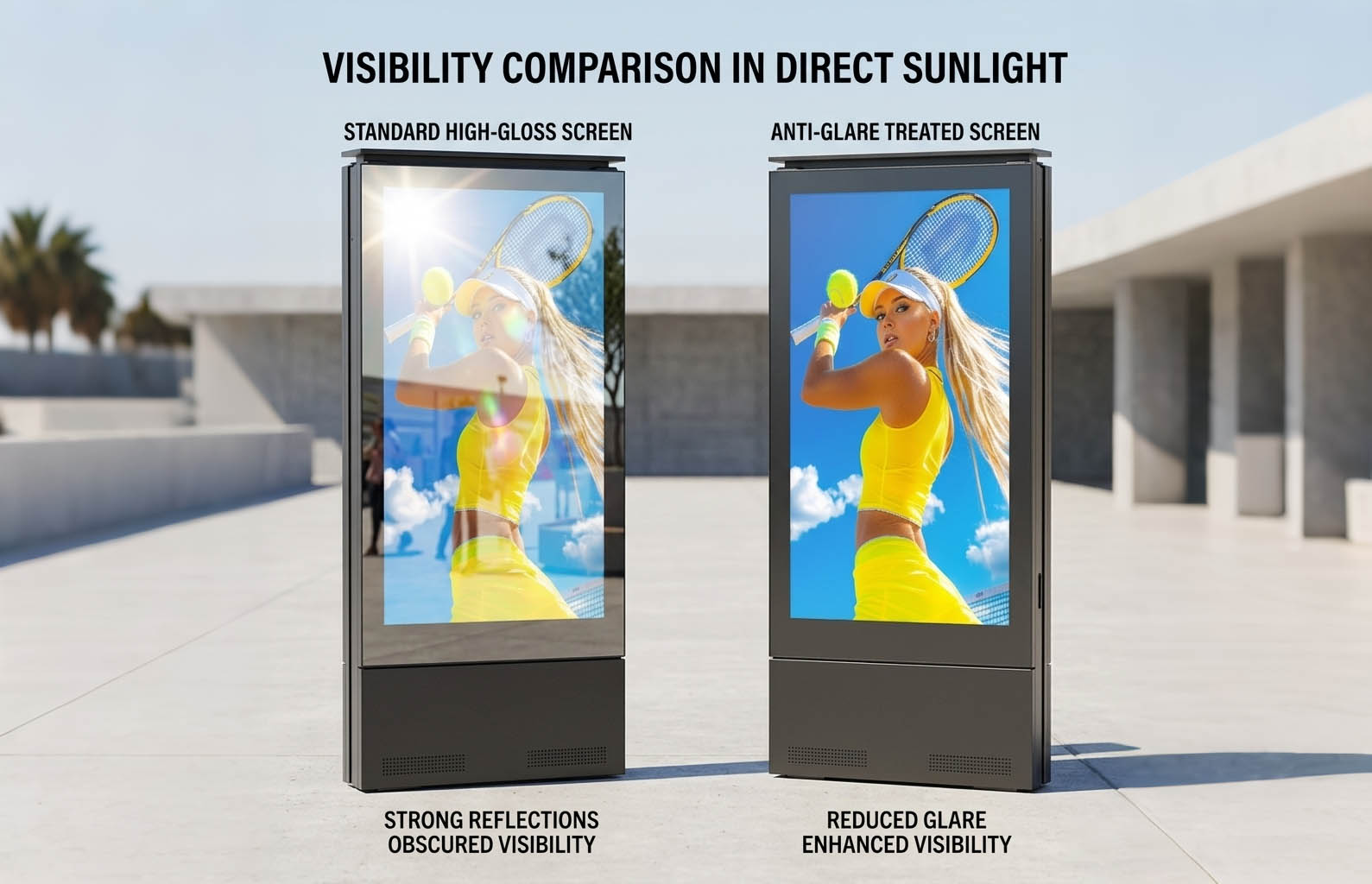
👉 В помещении экран выглядит четким, но под прямыми солнечными лучами читать становится сложно.
Во многих случаях проблема заключается не в самой дисплейной панели, а в... защитное стекло, используемое в наружных ЖК-дисплеях и наружных светодиодных дисплеях..
Вот где Антибликовое стекло AG играет решающую роль в достижении дисплеи, читаемые при солнечном светеОднако не все антибликовые стекла подходят для сложных условий эксплуатации на открытом воздухе.
В этой статье мы рассмотрим, как наружное витринное стекло проектируется, и почему это напрямую влияет на производительность наружные цифровые вывески, наружные киоски и системы отображения информации для «умного города».
По сравнению со стандартным антибликовым стеклом, Наружное демонстрационное стекло для цифровых вывесок необходимо достичь баланса между несколькими ключевыми свойствами:
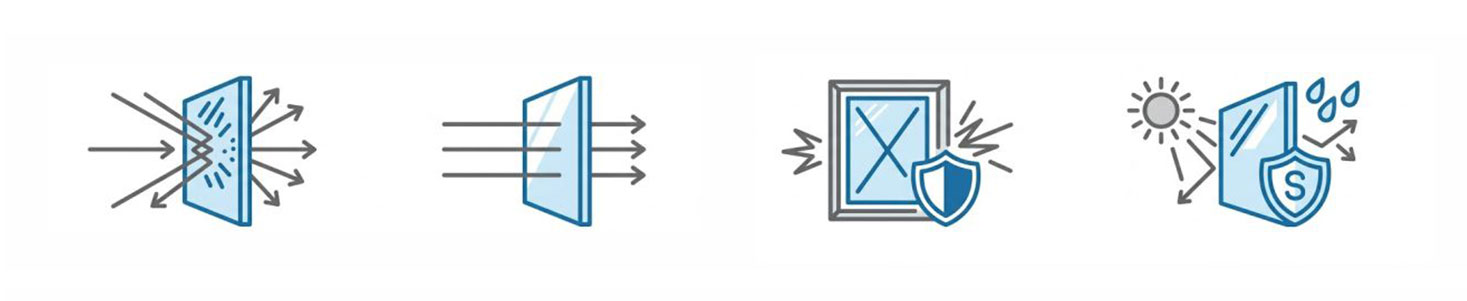
Если эти факторы не оптимизированы должным образом, возникают следующие распространенные проблемы:
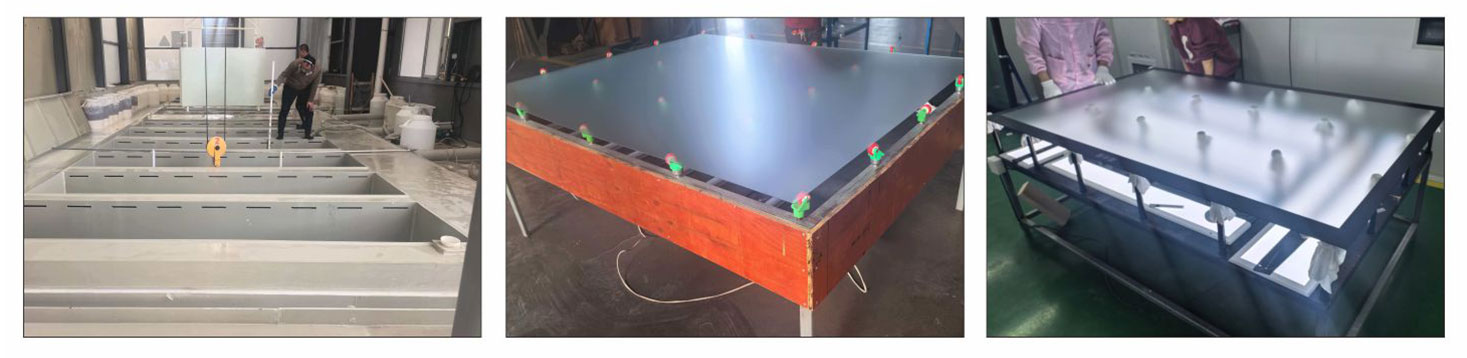
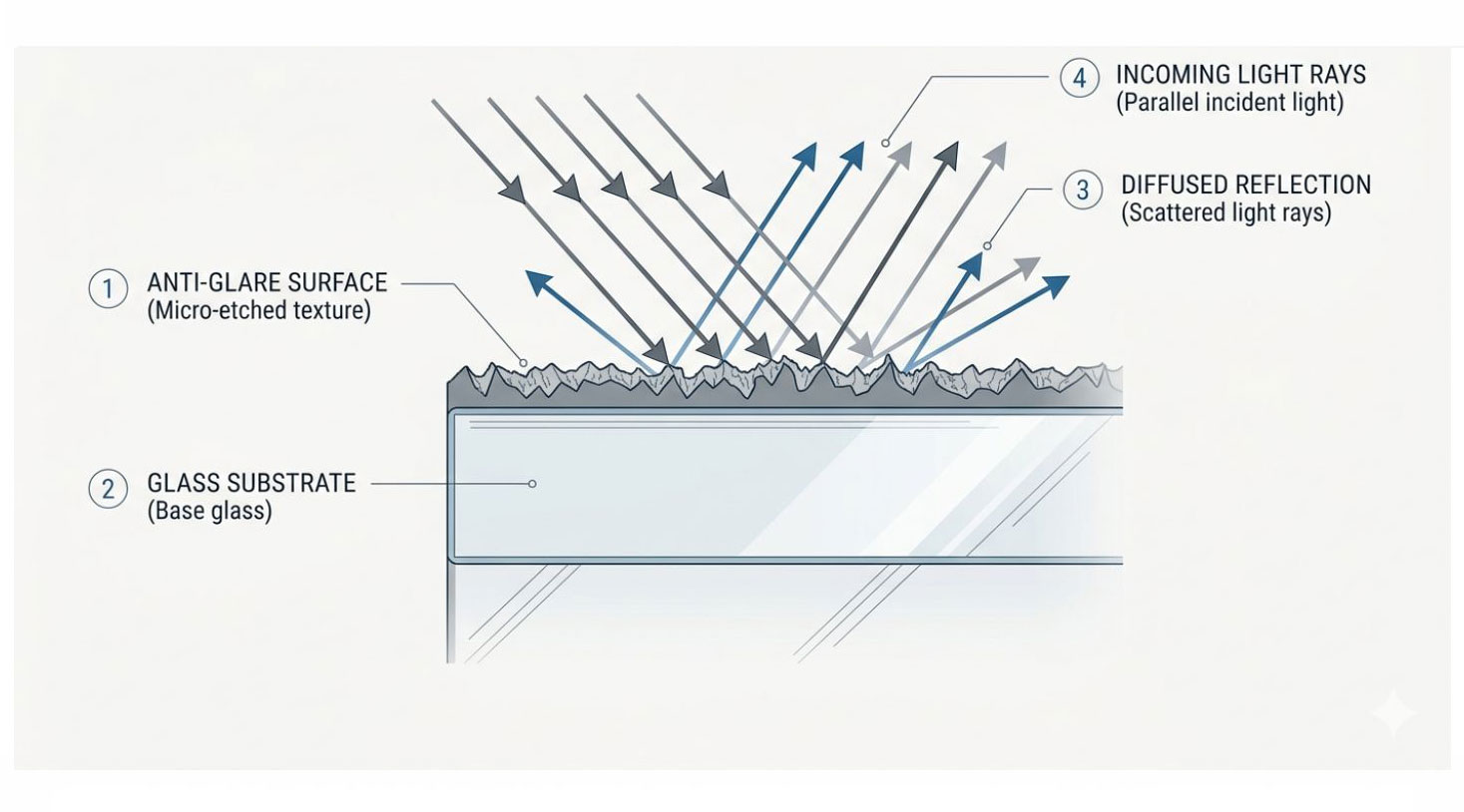
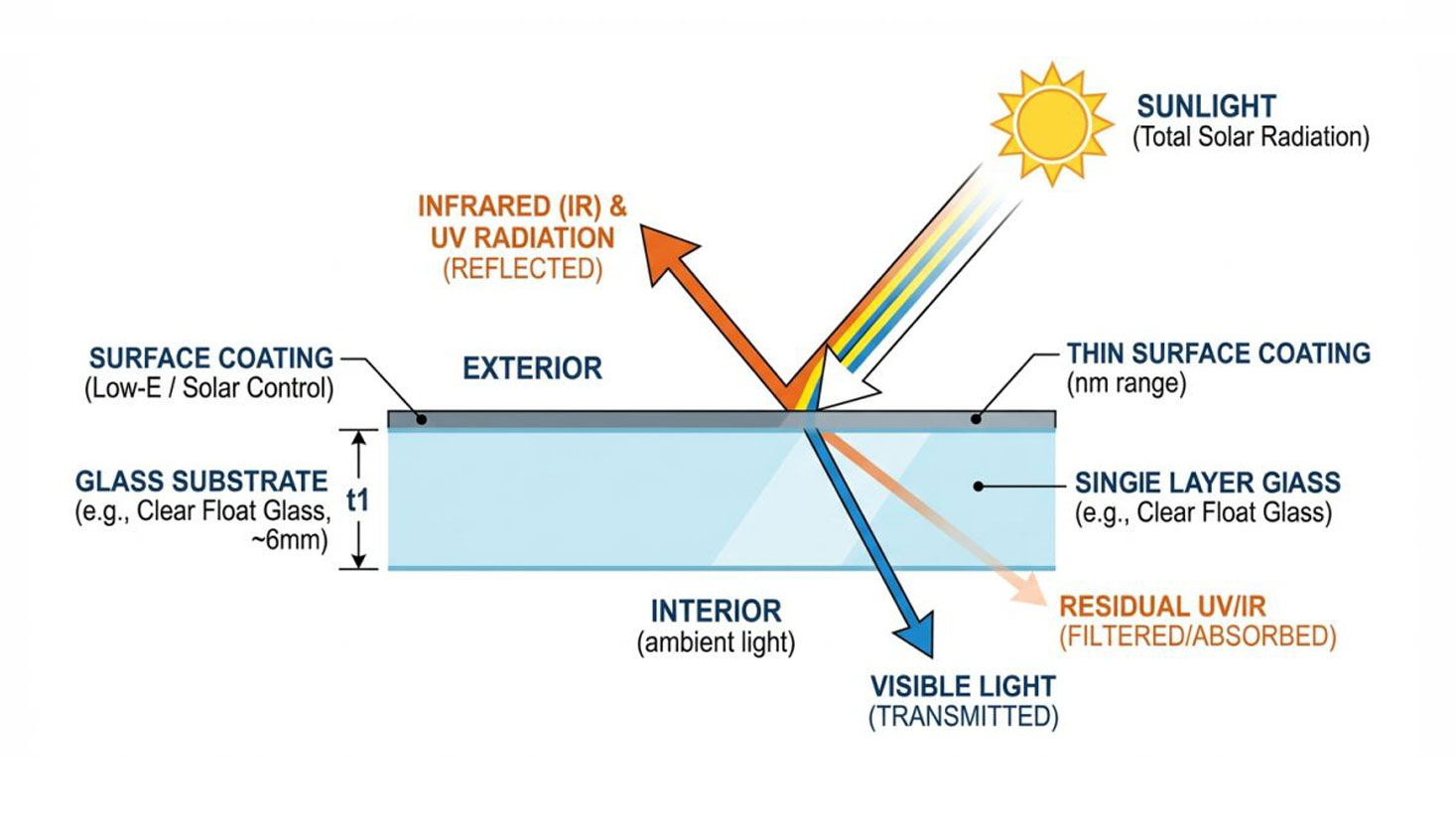
ключ к Антибликовое стекло для наружных дисплеев дело в структуре его поверхности.
В результате контролируемого химического травления или нанесения покрытия создается микродиффузионный поверхностный слой, который:
Для ЖК-дисплеи высокой яркости для наружного применения и светодиодные дисплеи для наружного примененияЭтот шаг необходим для достижения цели. читаемость дисплея на солнечном свете под прямыми солнечными лучами.
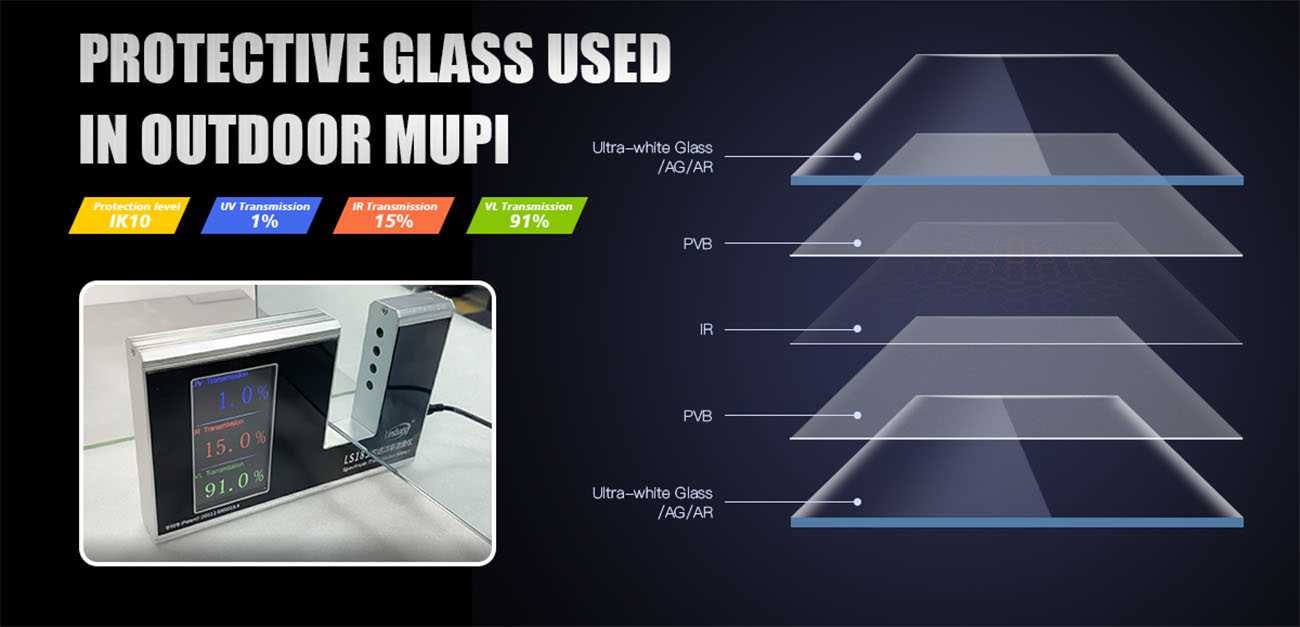
В условиях открытого воздуха оптические характеристики напрямую влияют на яркость, энергоэффективность и тепловые характеристики светильника. витрина.
Высокоэффективное стекло для наружных витрин обычно обеспечивает следующие характеристики:
После обработки поверхности стекло должно пройти процесс закалки, чтобы соответствовать требованиям к долговечности при использовании на открытом воздухе.
Закаленное стекло в сочетании с продуманной конструкцией обеспечивает улучшенные эксплуатационные характеристики. вандалоустойчивые наружные цифровые рекламные экраны.
Это значительно улучшает ситуацию:
В сложных условиях эксплуатации на открытом воздухе однослойного закаленного стекла AG может быть недостаточно. Часто требуются дополнительные усовершенствования. системы наружных цифровых вывесок.
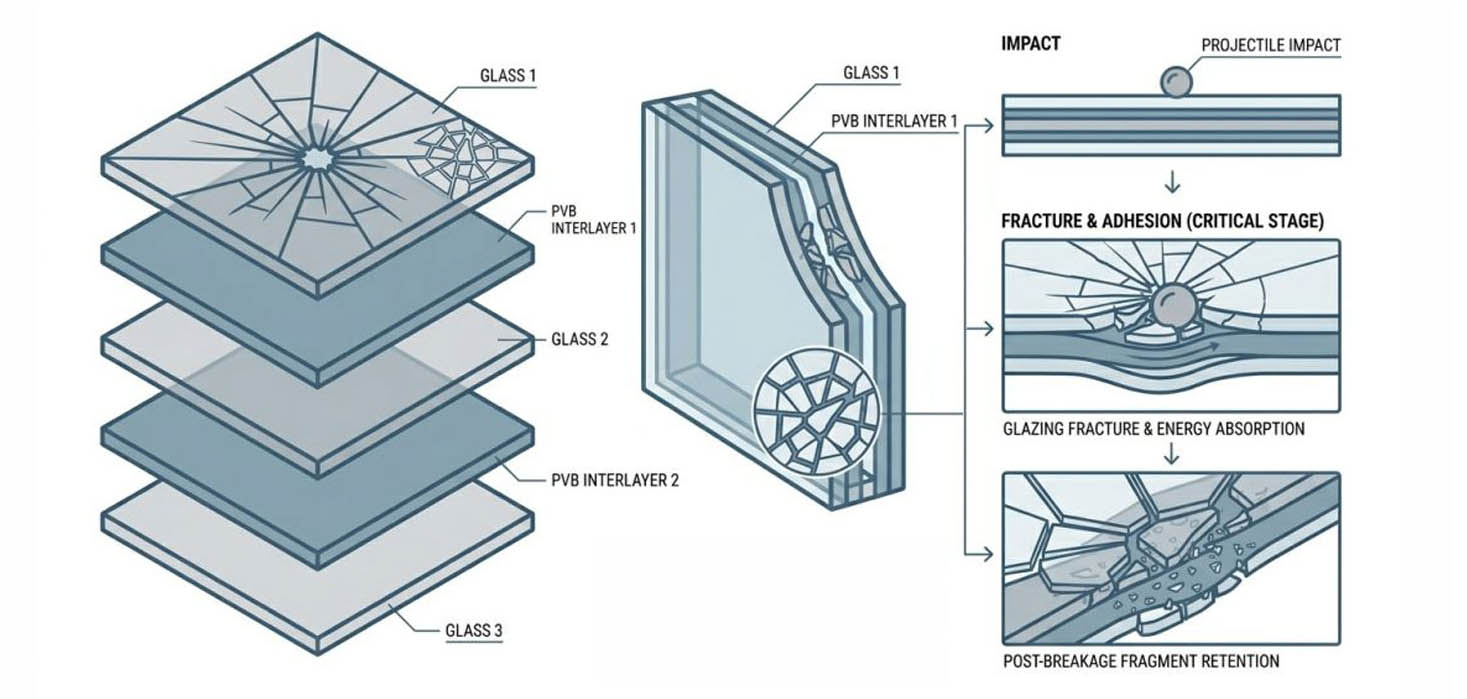
Ламинированное стекло состоит из нескольких слоев стекла, склеенных между собой промежуточным слоем из поливинилбутираля (ПВБ).
Даже при разрушении фрагменты остаются соединенными, что делает его идеальным для вандалоустойчивые наружные дисплеи.
Данная структура обеспечивает:
Функциональные покрытия дополнительно повышают эксплуатационные характеристики. наружное витринное стекло:
Эти покрытия необходимы для Цифровые экраны высокой яркости для наружного применения, работающие круглосуточно..
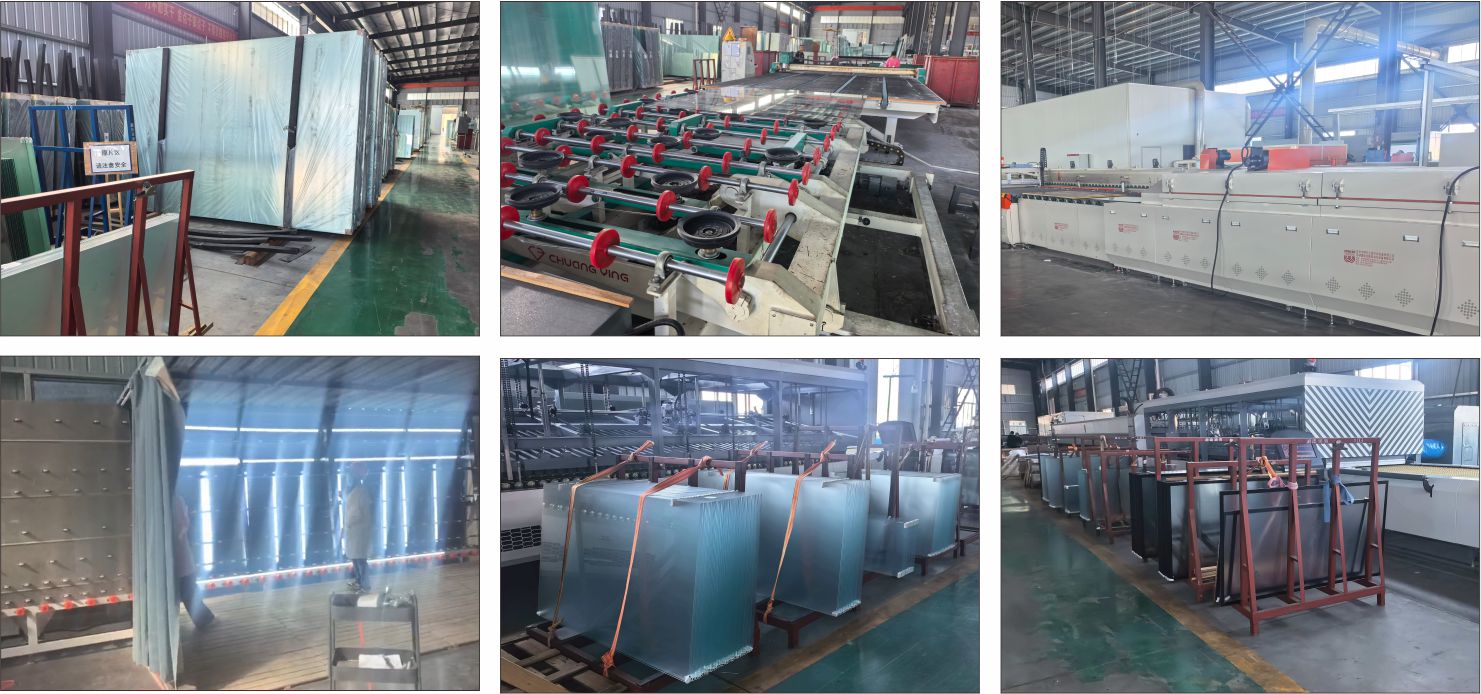
Выполнение наружное витринное стекло Это достигается за счет строго контролируемого производственного процесса:
Необработанное стекло → Резка → Шлифовка кромок → Очистка и предварительная обработка → Обработка AG / нанесение покрытия → Закалка → Ламинирование (опционально) → Окончательная проверка
На каждом этапе обеспечивается:
Для наружные цифровые вывескиОдной лишь яркости недостаточно.
👉 Качество защитное стекло для наружных ЖК-дисплеев и наружных светодиодных дисплеев непосредственно влияет на:
Неправильный выбор стекла может привести к снижению эксплуатационных характеристик и увеличению затрат на техническое обслуживание.
В CNLC мы специализируемся на наружные ЖК-дисплеина открытом воздухе Светодиодные дисплеи, и решения для наружной цифровой рекламы.
Мы гарантируем высокое качество. интеграция стекла в наружные витрины через:
Это обеспечивает:
Наши решения широко используются в:
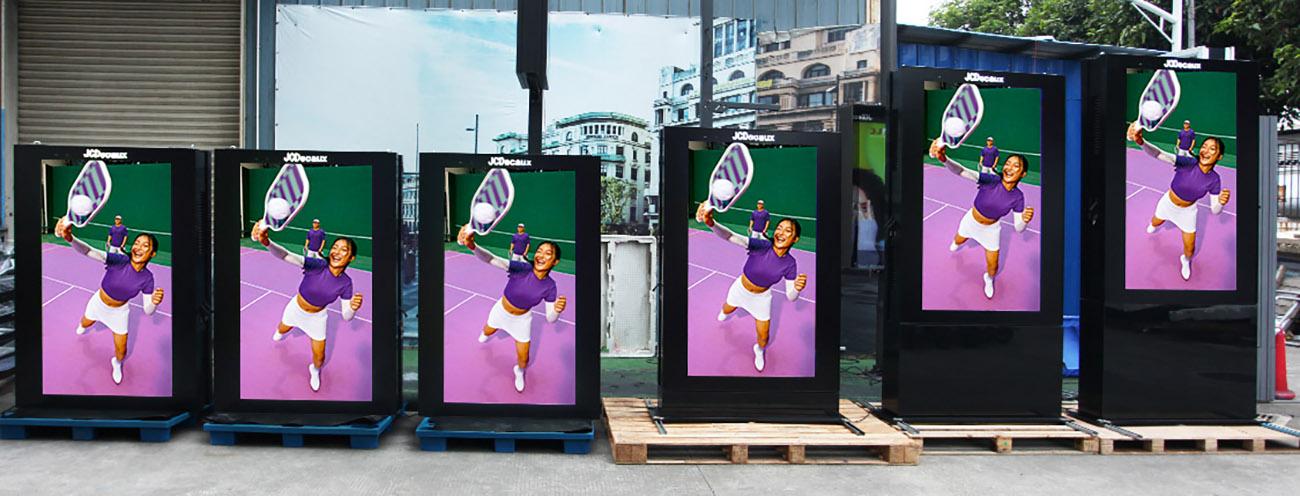
Стекло AG — это не просто покрытие поверхности, это важнейший компонент. Системы наружных цифровых вывесок, читаемые при солнечном свете.
Понимание того, как наружное витринное стекло Разработанный и изготовленный нами продукт поможет вам:

 Тел. : 8613728004632Тел. : 8602082332833
 Электронная почта : info@cnlcdisplay.com
 ОСТАВАЙСЯ НА СВЯЗИ Получайте наши новости, предложения и многое другое...